

Solar Batteries Versus Generators in Florida
- Ronnie Brewer
- 4 days ago
- 5 min read
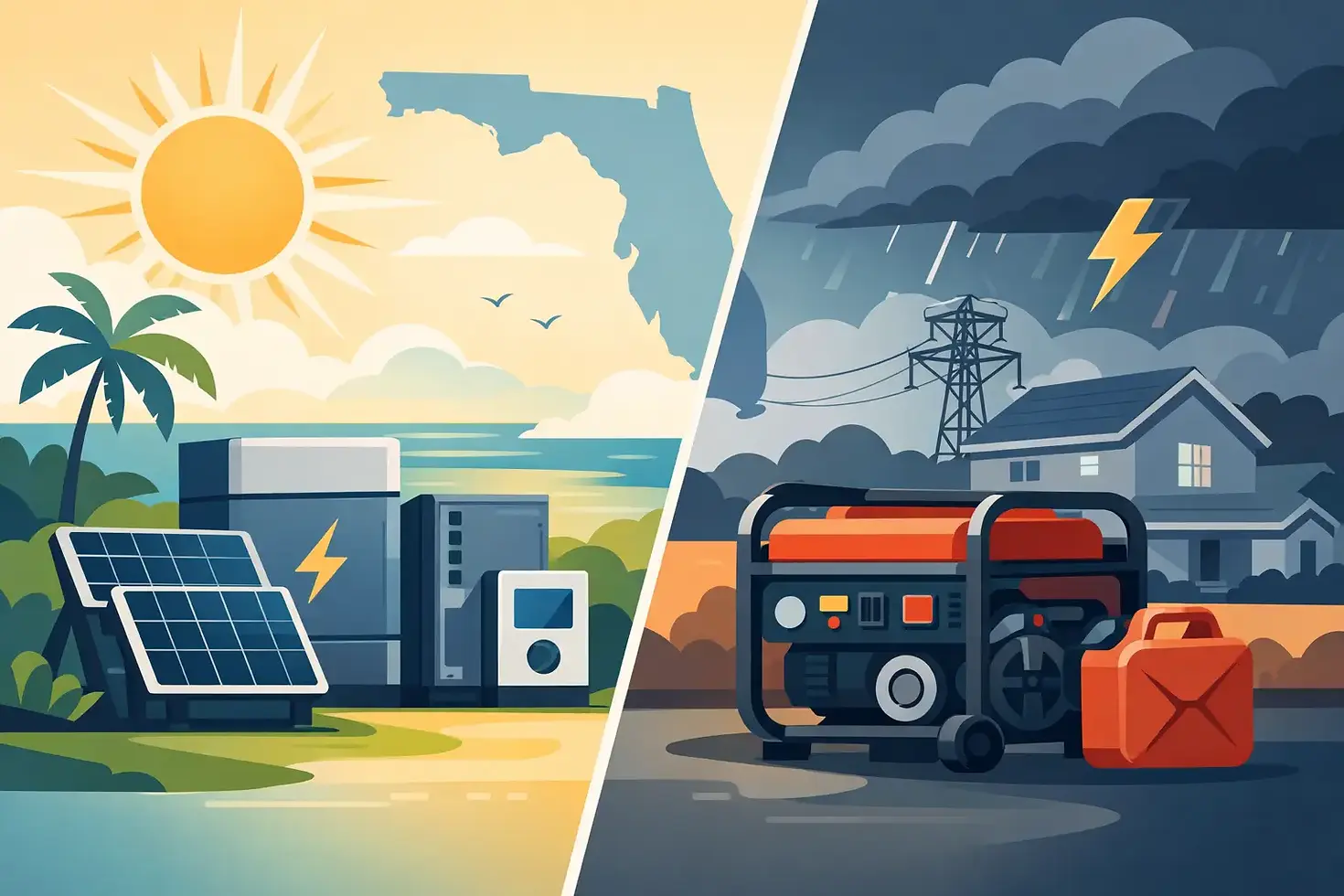
When a hurricane warning appears on the forecast or a summer storm drops power for half the neighborhood, backup power stops being an abstract upgrade. The choice between solar batteries versus generators comes down to what you want protected, how long you expect to need power, and whether you want to depend on fuel during an outage.
For many Florida homeowners, a battery paired with solar offers quiet, automatic backup and lower day-to-day energy costs. A generator can provide substantial power for a lower upfront price, especially when fuel is available and the outage is expected to last several days. Neither answer is automatic. The right system should match your home, your budget, and the appliances that matter most when the grid goes down.
Solar Batteries Versus Generators: The Core Difference
A solar battery stores electricity for later use. During normal operation, it can charge from your solar panels or, in some system designs, from the grid. When utility service fails, a properly configured battery system can switch to backup power automatically and keep selected circuits running.
A generator makes electricity by burning fuel. Portable models typically use gasoline, while standby generators may use natural gas or propane. Most generator systems require either manual setup or an automatic transfer switch before they begin supplying your home.
The practical difference is simple: a battery stores energy you already produce or purchase, while a generator creates power as long as it has fuel. That distinction affects noise, maintenance, outage planning, operating costs, and the level of convenience your family experiences.
What a Solar Battery Can Do for a Florida Home
A battery is often the better fit for homeowners who want backup power without the noise, fumes, or fuel-storage concerns of a generator. It can keep essential loads available when the grid is down, such as refrigeration, lights, internet equipment, garage doors, select outlets, and certain medical devices.
With solar connected, the battery can recharge during daylight hours. That gives the system an advantage in an extended outage: instead of relying only on stored energy, your panels may continue producing power for approved backup loads when the sun is out. Battery capacity, solar production, weather, and household usage all determine how long that power lasts.
Florida sunshine is a real asset, but homeowners should avoid assuming solar panels alone will operate during a blackout. Standard grid-tied solar is designed to shut down for utility-worker safety when the grid fails. A battery and the correct backup equipment are what allow solar production to support the home during an outage.
Battery systems also offer value before the next storm arrives. Depending on your utility rate structure and system design, stored solar energy can be used later in the day when household demand is higher. That can help reduce reliance on utility power and make better use of the energy produced on your roof.
The trade-offs of battery backup
A battery has a higher initial investment than many portable generators, and it has a defined amount of stored energy. Running central air conditioning, electric heat, a pool pump, an electric water heater, and multiple large appliances at once can drain a battery quickly. Most homeowners get the best results by identifying essential circuits and making a realistic plan for energy use during an outage.
A battery is not maintenance-free forever, either. It is an advanced electrical system that should be professionally designed and installed, and its long-term performance depends on equipment quality, configuration, and responsible use.
When a Generator Makes More Sense
Generators remain a practical backup option for many Florida properties. If your primary goal is to power larger loads for an extended period and you have dependable access to fuel, a generator can be a strong choice.
A properly sized standby generator can support more of the home than a modest battery setup, potentially including air conditioning and other high-demand equipment. For households that cannot tolerate long outages or need substantial power for business equipment, refrigeration, well pumps, or medical needs, that capacity can be compelling.
Portable generators cost less upfront and can be useful for limited emergency power. They are not, however, a plug-and-play whole-home solution. They must be operated outdoors, far from doors, windows, and vents because carbon monoxide is dangerous. They also require safe electrical connection practices. Never run a generator in a garage, under an enclosed patio, or through an improvised connection to household wiring.
The trade-offs of generator backup
Fuel is the generator's biggest advantage and its biggest vulnerability. During widespread storms, gas stations may be closed, roads may be blocked, and fuel supplies can be limited. Homeowners must also store gasoline safely, monitor fuel levels, and plan for refueling during difficult conditions.
Generators produce noise and emissions, require routine maintenance, and need periodic test runs. A standby unit may be automatic, but it still depends on fuel delivery and mechanical components. For some neighborhoods, the sound of a generator running through the night is a significant drawback.
Cost Is More Than the Purchase Price
Comparing equipment price alone can lead to the wrong decision. A portable generator may be inexpensive at checkout, but fuel, oil changes, maintenance, extension cords, transfer equipment, and replacement over time all add to ownership costs. A standby generator has a larger installed cost, plus ongoing fuel and service requirements.
Solar batteries usually require a greater upfront investment, particularly when added to a new or existing solar electric system. Yet they can provide daily value by storing solar energy and reducing grid dependence, not just sitting idle until an outage. Federal tax-credit eligibility may apply to qualifying solar and battery installations, but every property owner should confirm current requirements with a qualified tax professional.
Financing can also change the decision. A system that protects key home functions while helping control monthly utility costs may be easier to justify than an emergency-only purchase. The best calculation looks at your household's energy use, outage risk, electric rates, available incentives, and how long you expect to own the property.
Choose Backup Power Based on Your Real Priorities
Start with the appliances and systems you truly need during an outage. Refrigeration, lighting, communications, security equipment, a garage door, and medical devices are common priorities. Then consider comfort. Do you need to run one efficient air-conditioning system, or can your household manage with fans and selective cooling for a short period?
Next, think about outage duration. A battery can be excellent for short outages and can stretch much further when solar production is available and energy use is controlled. A generator may be better suited for long outages when solar production is limited by storm conditions or when the home must support larger loads continuously.
Your property also matters. Roof space, shade, electrical-panel capacity, existing solar equipment, gas availability, and local permitting requirements can all affect the best path. This is why a site-specific assessment is more useful than choosing based on a neighbor's setup or a big-box store price tag.
A Hybrid Plan Can Be the Right Answer
For some homes, the decision is not strictly battery or generator. A solar battery can handle everyday backup needs quietly and automatically, while a generator serves as added protection for prolonged emergencies or unusually large loads. This approach can provide flexibility, though it also raises total project cost and requires careful system design.
Other homeowners may be better served by starting with solar and a battery sized for critical loads, then expanding later if their needs change. A phased plan can make sense when the goal is to control energy costs now while building stronger storm resilience over time.
Florida Solar East helps homeowners evaluate solar production, battery capacity, household loads, and the practical savings opportunities at their property. With more than 35 years of regional experience, the focus is on making solar simple, cost-effective, and suited to the way Florida families actually use energy.
The best backup system is the one that works before you need it. A free site survey can turn storm-season uncertainty into a clear plan for protecting your home, controlling energy costs, and keeping the essentials running when the grid cannot.


Comments