

3 Mounting Paths for Metal Roof Solar and How to Avoid Panel Removal
- Ronnie Brewer
- 8 hours ago
- 10 min read
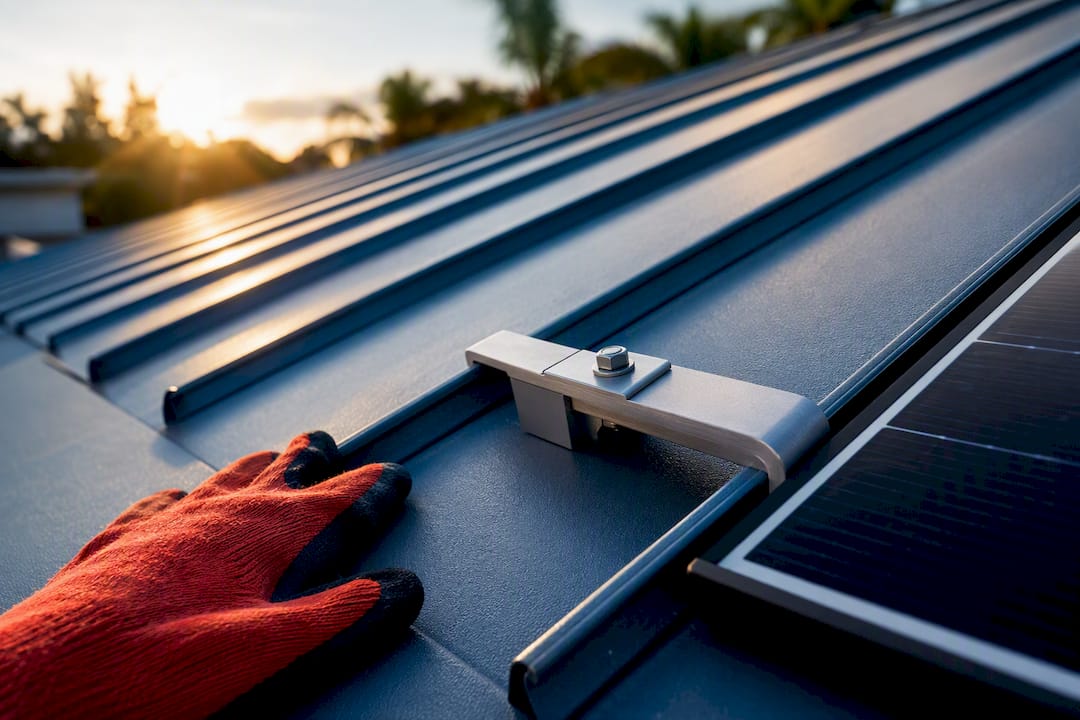
Metal roofs are one of the best surfaces for solar because their standing seams give installers a clamp-friendly, non-penetrating attachment point that protects your warranty. You have three main mounting paths: standing seam clamps, rail-based racking, and rail-less direct-attach systems. Before signing anything, get a roof-manufacturer warranty confirmation and a structural/permit check, and start by gathering roof photos, your roof’s age, and requesting a free estimate.
TL;DR:
Standing seam roofs enable faster, clamp-only installations that preserve waterproofing and warranty, often cutting labor time by up to 50 percent.
Railed systems add flexibility on uneven or mixed-profile roofs but cost about 25 to 50 percent more than rail-less options, which are ideal for standing seam structures.
Metal roof solar costs typically range from $2.80 to $3.50 per watt, with a 10 to 20 percent premium over asphalt, offset by savings on reroofing and faster installation.
Proper pre-installation checks include verifying roof age, inspection of seams and fasteners, obtaining manufacturer warranties, and a stamped structural engineer’s review.
Ensuring electrical bonding, bonding washers, and a grounded system is integrated is crucial for safety, as the metal roof is part of the electrical system.
Table of Contents
Mounting Methods for Different Metal Roof Profiles
Your roof’s profile decides which hardware goes on top of it, and the differences matter more than most homeowners expect.
Standing seam is the gold standard for metal roof solar mounting. Installers use clamps that grip the vertical seams without drilling a single hole, which preserves the roof’s waterproofing and its warranty. Because the seams give crews a built-in alignment guide, standing seam installs often run 30 to 50 percent faster in mounting labor than a comparable shingle job.
Corrugated and R-panel roofs work differently. Without a raised seam to clamp onto, installers typically use specialized brackets that fasten through the metal panel itself. Sealed penetrations are often unavoidable here, and long-term weathertightness depends on quality gaskets and periodic fastener checks, according to SolarReviews.
Trapezoidal panels sit between the two, sometimes accepting seam clamps and sometimes requiring bracket mounts depending on the rib spacing. Metal tile roofs usually need custom flashing or tile-specific mounts, and their broad, flat surfaces occasionally suit thin-film panels for a lower-profile look.
Quick reference by roof type:
Standing seam: clamp-based, zero penetrations, fastest install
Corrugated/R-panel: bracket-based, sealed penetrations common
Trapezoidal: seam clamp or bracket, depends on rib geometry
Metal tile: custom flashing, sometimes thin-film compatible
Rail-Based vs. Rail-Less: Which System Fits Your Roof?
Rail-based systems bolt aluminum rails across your roof first, then attach panels to the rails, similar to how solar goes on a shingle roof. Rail-less, or direct-attach, systems skip the rails entirely and clamp panels straight to the seam or bracket.
The cost gap is real. Rail-less mounting can cut material and logistics costs by roughly 25 to 50 percent compared to traditional railed racking, mainly because you are shipping and installing far fewer parts.
Rail-based: more adjustable for uneven roofs, better for mixed-profile arrays, slightly higher material cost
Rail-less: lighter, faster to install, lower profile, best suited to standing seam and evenly spaced trapezoidal panels
Rail-less systems win on standing seam roofs almost every time. Standing seam gives you a strong, evenly spaced attachment surface, so skipping the rail rarely costs you structural performance. Corrugated roofs sometimes need extra engineering review since the bracket spacing has to match the panel’s rib pattern exactly.
What Does Metal Roof Solar Cost, and How Fast Does It Pay Back?
Installed solar on a metal roof typically runs $2.80 to $3.50 per watt, which works out to roughly a 10 to 20 percent premium over asphalt-roof installs. This premium buys you specialized clamps, extra engineering review, and often a faster install.
Here is how that plays out on an 8 kW system, a common size for a Florida single-family home:
That federal credit applies the same way regardless of roof type, so the metal-roof premium shrinks once you factor it in. State and utility incentives vary widely and will move your real payback timeline, so check what is available where you live before locking in a final number. One number never printed on a metal roof invoice: the reroof cost you avoid entirely, since metal roofs typically outlast the solar panels sitting on them, unlike asphalt roofs that often need panels removed and reinstalled mid-system-life.
Is Your Roof Ready? Checks and Paperwork Before You Sign
A metal roof that looks fine from the driveway can still have problems that surface only once someone starts drilling or clamping. Walk through this before you get bids:
Check roof age. Metal roofs commonly last 40 to 70 years, but paint finishes and sealants age faster than the panel itself.
Inspect seams and fasteners. Loose seams or corroded exposed fasteners need repair before mounting hardware goes on top.
Look at the finish. Chalking, peeling, or rust spots suggest the coating is failing, even if the metal underneath is sound.
Decide if reroofing comes first. If your roof is within five to seven years of needing replacement, reroofing before solar install is almost always cheaper than removing and reinstalling panels later.
Request paperwork. Ask for a roof-manufacturer warranty confirmation letter and a stamped structural letter before any hardware touches your roof.
Pro Tip: Take dated photos of your seams, fasteners, and any visible corrosion before your first estimate. It gives every installer the same starting point and makes warranty disputes far easier to resolve later.
That structural letter is not optional paperwork. Manufacturer best practice calls for a licensed engineer’s stamped review before your installer finalizes clamp specs. You can read more about what warranties actually cover on Florida roofs in our warranty coverage guide.
How Grounding and Bonding Change on a Metal Roof
A conductive metal roof is not just a mounting surface. It is part of the electrical system whether you plan for it or not, which means bonding is not something your installer can skip.
Standard practice involves bonding washers or lugs at each clamp point to create a continuous electrical path back to the grounding system. Two references worth knowing:
NEC sections like 690.43 and 690.45 govern equipment grounding and bonding conductor sizing for PV systems
Your local Authority Having Jurisdiction (AHJ) reviews the bonding plan as part of permit approval, not as an afterthought
Ask your installer for the grounding plan and confirmation that the permit has actually been pulled, not just submitted. A verbal “we’ll handle it” is not documentation, and you want a paper trail if anything ever needs to be inspected again.
Does Solar Help or Hurt Your Metal Roof Over Time?
Panels shading a metal roof can actually reduce the roof’s surface temperature and lower cooling loads in warm months, since the panels intercept sunlight before it heats the metal directly. That is a quiet bonus most sales conversations skip entirely.
Maintenance stays simple if you keep a routine:
Inspect panels and mounts twice a year, more often after major storms
Rinse dust and pollen buildup with plain water; avoid pressure washers near seams
Check clamp torque periodically since thermal cycling can loosen fasteners over years
Keep manufacturer letters, structural reports, and permit records together in one folder
Our maintenance guide for Florida homes walks through a full seasonal checklist if you want more detail on cadence and cleaning.
What Should a Professional Metal Roof Solar Install Include?
Florida Solar East works with homeowners and property managers across metal roof profiles, from standing seam to trapezoidal panel roofs. A proper estimate includes site evaluation, PV system design, fastening method selection matched to your specific roof, and financing guidance for claiming the 30% federal tax credit.
Every install we scope includes three deliverables before work begins: a roof-manufacturer warranty confirmation, a stamped structural letter, and a documented grounding plan. That paperwork protects both your roof warranty and your solar investment for decades.
How Metal Roofs Affect Solar Energy Production
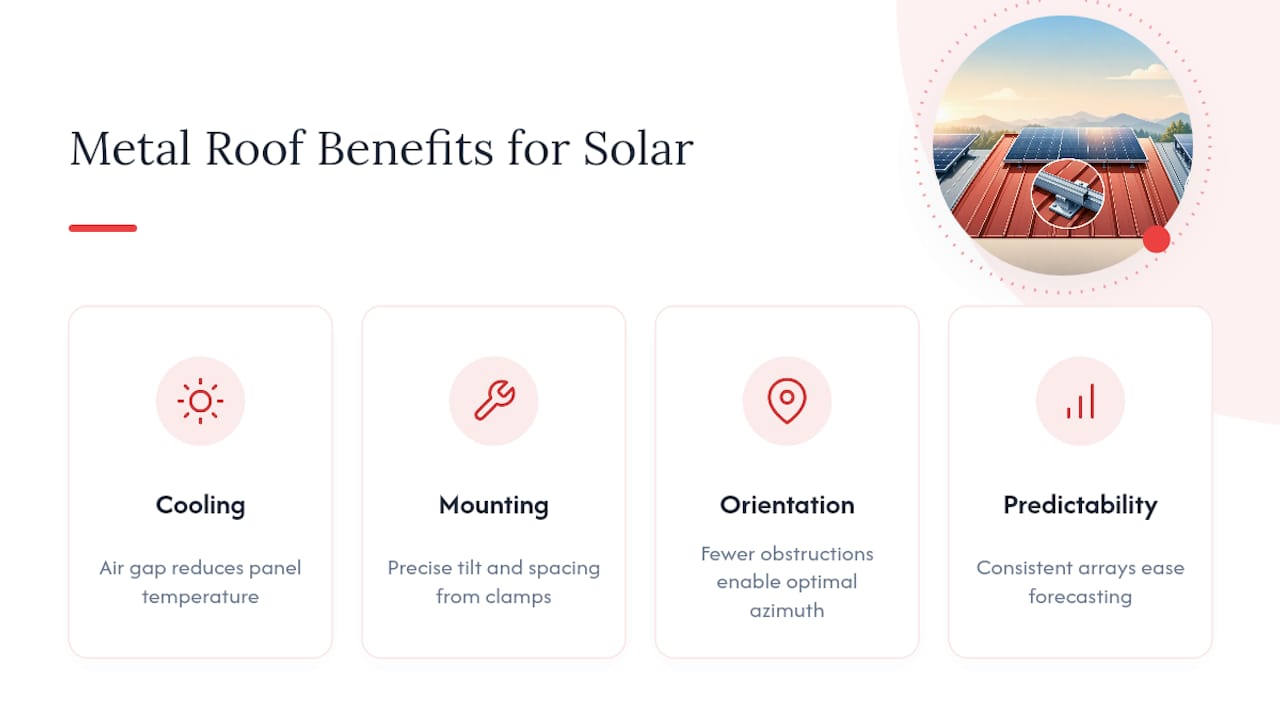
Metal roofs do not just host solar panels well, they can support them producing at their best. Standing seam clamps hold panels at a precise, engineer-approved tilt and spacing, which keeps airflow consistent underneath the array.
That airflow matters more than most people realize. Panels lose efficiency as they heat up, typically losing a fraction of a percent of output for every degree above their rated temperature. Metal roofing’s naturally raised seam profile creates a small air gap between the panel and the roof deck, which helps panels shed heat faster than they would sitting flush against asphalt shingles.
Standing seam roofs also tend to run long, straight rooflines with fewer obstructions like vents and pipe boots clustered in awkward spots. That gives installers more room to orient panels toward true south or the roof’s optimal azimuth without compromise, rather than working around obstacles the way they sometimes have to on older asphalt roofs with irregular penetrations.
The metal substrate itself does not generate or block energy production. What it does is give installers a stable, predictable mounting surface that supports consistent panel spacing and tilt across the whole array. Consistent spacing means fewer shading conflicts between rows, and fewer shading conflicts mean your system produces closer to its rated output year over year. For property managers overseeing multiple buildings, that consistency also makes it easier to predict production across a portfolio of similar roofs.
Thin-Film vs. Crystalline Panels on Metal Roofing
Crystalline silicon panels, the rigid glass-and-aluminum-frame modules most homeowners picture when they think “solar panel,” work well with every metal roof mounting method described above. They pair naturally with standing seam clamps, corrugated brackets, and trapezoidal attachments alike, and they deliver the highest watts-per-square-foot output of any residential panel type.
Thin-film panels are a different animal. These flexible, lightweight modules can sometimes be laminated directly onto certain standing seam or metal tile surfaces without racking hardware at all, which appeals to homeowners who want the lowest possible visual profile. The tradeoff is real: thin-film panels typically convert less sunlight into electricity per square foot than crystalline panels, so you need more roof area to hit the same system size.
For most homeowners chasing maximum energy savings, crystalline panels remain the stronger choice on metal roofs, especially with rail-less clamp systems that already minimize visual bulk without sacrificing output. Thin-film makes more sense on architecturally sensitive buildings, curved metal roofs where rigid panels do not conform well, or commercial metal buildings prioritizing weight reduction over maximum output per square foot. Our guide on choosing the right panels for your home breaks down the tradeoffs by roof type in more detail.
Does a Reflective Metal Roof Boost or Hurt Panel Output?
A shiny metal roof does not meaningfully boost the output of panels mounted flush against it, because the panels sit directly on top of the reflective surface rather than receiving bounced light from an angle. The reflectivity benefit people often ask about mostly applies to bifacial panels, which have active cells on both the front and back, and even then the gain depends heavily on mounting height and tilt.
Where reflectivity does help is temperature. A reflective or “cool” metal roof finish absorbs less heat than a dark asphalt shingle roof, which keeps the roof deck cooler underneath your array. Cooler roof decks mean cooler panel backsides, and cooler panels produce more efficiently, since heat is one of the biggest drags on photovoltaic output.
Standard crystalline panels mounted with a small air gap, which standing seam clamp systems create naturally, capture most of that cooling benefit already. You do not need a specially reflective metal finish to see it. Where reflectivity can occasionally cause a minor issue is glare complaints from neighbors or passing traffic if your roof has a particularly bright, unpainted galvanized finish, something worth mentioning to your installer if your property sits close to a road or shared property line.
Staying Safe During a Metal Roof Solar Installation
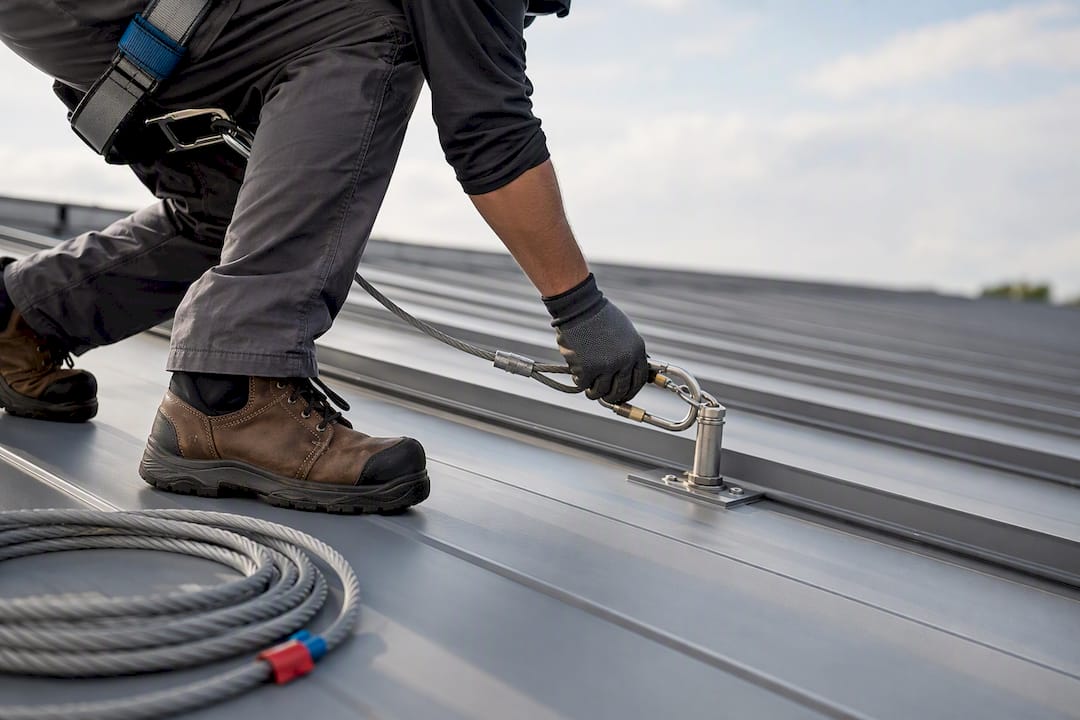
Metal roofs present a specific set of hazards that installers need to plan around before anyone climbs a ladder. The surface can be slippery when wet or dewy, and standing seam panels have raised edges that create real trip hazards for crews moving equipment across the roof.
Reputable installers use fall protection anchored to structural framing, not to the roof cladding itself, since metal panels alone cannot reliably bear a fall-arrest load. Crews should also wear rubber-soled footwear designed for metal surfaces and avoid working during or immediately after rain, since wet metal loses traction fast.
Electrical safety matters just as much as fall protection. Metal roofs are conductive, so a poorly bonded system creates shock risk for anyone touching the roof or nearby metal fixtures during a fault. That is exactly why the grounding and bonding plan covered earlier in this guide is not a paperwork formality. It is a safety requirement.
Homeowners do not need to supervise every safety detail personally, but you should ask direct questions: does the crew carry fall protection certification, do they anchor to the structure, and do they have a plan for wet-weather delays? A contractor who answers these clearly and without hesitation is one who has done this enough times to know the risks by heart.
What I’d Tell a Homeowner Standing at This Decision Point
If your roof has more than seven good years left, move forward with solar now rather than waiting. If it is closer to end of life, reroof first. It nearly always costs less than paying to remove and reinstall panels a few years later.
Before you sign anything: gather roof photos, request the manufacturer’s warranty confirmation letter, collect two to three bids, and insist on a stamped structural letter. Homeowners who chase the lowest upfront quote often skip these steps, and it costs them more over the system’s lifetime than it ever saved upfront.
— Ronnie
Get a Metal Roof Solar Estimate from Florida Solar East
Florida Solar East is the straightforward alternative to piecing together your own installer, engineer, and financing paperwork separately. We handle metal roof solar installations across standing seam, corrugated, and trapezoidal profiles, and every estimate includes the fastening method suited to your specific roof profile.
Our team helps with financing options, including guidance on claiming the 30% federal tax credit, so you know your real net cost before committing to anything. We also install solar pool heating and hot water systems if you are looking to expand savings beyond your electric bill. Ready to see what your roof qualifies for? Request a free site estimate for PV installation and get a real number, not a generic online calculator guess.
Sources
For deeper technical detail beyond this guide, EnergySage’s metal roof breakdown covers penetration-free mounting basics. SurgePV’s clamp and wind-load guide explains ASCE 7-22 calculations in depth, and S-5!'s metal roof solar page details clamp product specifics and load testing.
Recommended


Comments