

Florida Homeowners: Solar Water Heater Credit, Dec. 31, 2026 Deadline
If you installed your solar water heater and it was placed in service on or before December 31, 2025, you can still claim the Residential Clean Energy Credit on your federal return. Systems placed in service after that date no longer qualify. The One, Big, Beautiful Bill ended the credit early, so the date on your paperwork now decides everything.
TL;DR:
Only solar water heater installations completed and operational by December 31, 2025, qualify for the federal tax credit, regardless of contract or payment date.
The standard for eligibility from 2022 to 2025 was certification through the OG-300 program, with 30% of total qualified costs covered.
Proper documentation includes a signed “placed in service” statement, final permit inspection, and invoice date showing the system is functional.
Florida provides ongoing savings through a sales tax exemption on solar systems, which can significantly reduce upfront costs.
Manufacturers, installers, and property owners should verify certification, collect documentation, and explore local rebates to maximize savings before the federal deadline.
Table of Contents
Can You Still Claim the Solar Water Heater Tax Credit?
The short answer is date-dependent. Public Law 119-21, known as the One, Big, Beautiful Bill (OBBB), moved up the expiration of the federal Residential Clean Energy Credit under Section 25D. Any solar water heater expenditure made after December 31, 2025 is no longer eligible, according to the IRS OBBB FAQ page.
That cutoff is not a suggestion. It is a hard line the IRS draws between homeowners who finished their project in time and those who did not. If your system went in during 2024 or early 2025, you are almost certainly fine. If your contractor is still scheduling installs for 2026, the federal credit will not apply, no matter how efficient the equipment is.
The rest of this guide covers exactly how to check your eligibility, what documentation to pull together, and what still helps if you missed the window, including Florida’s own sales tax break.
Who Can Still Claim the Credit, and How Does the Cutoff Work?
Eligibility hinges on when the system was “placed in service,” not when you signed the contract or paid the deposit. The IRS treats an installation completed after December 31, 2025 as an expenditure after the cutoff, even if you ordered the equipment months earlier.
That distinction trips up a lot of homeowners. Paying a deposit in November 2025 does not lock in the credit if the crew does not finish the job until February 2026.
Before you assume you qualify, confirm these three things:
Your installer’s final completion date, ideally documented in writing
The date your local permit received final inspection sign-off, since jurisdictions often use this as proof of completion
The invoice date showing the system was fully operational, not just delivered
Pro Tip: Ask your installer for a signed “placed in service” statement the day the job wraps up. Permitting offices can take weeks to update records, and you want a paper trail that doesn’t depend on their timeline.
If your project straddles the deadline, a permit final inspection record is often the cleanest evidence you have.
What Made a Solar Water Heater Eligible From 2022 to 2025?
For installations completed between 2022 and 2025, the Residential Clean Energy Credit covered 30% of qualified costs for solar water heating property, provided the system met a specific performance standard. The IRS required certification through the Solar Rating Certification Corporation’s OG-300 program or an equivalent state-approved rating, confirming that at least half the system’s energy came from the sun.
That 30% figure applied to the full qualified cost, not just the collector panel, according to the IRS Residential Clean Energy Credit page.
What counted toward that 30%:
Equipment cost, including collectors, storage tanks, and pumps
Labor for onsite preparation, assembly, and original installation
Piping and wiring needed to connect the system
What did not count:
Structural roofing components that serve no energy function
Systems installed at rental properties you do not live in part of the year
The residence rule matters more than people expect. A main home or a second home both qualify. A property you rent out full-time and never occupy does not, because the residential credit is built around personal-use housing.
How Do You File Form 5695 for a Solar Water Heater?
If your system was placed in service on or before December 31, 2025, you claim the credit using Form 5695, Residential Energy Credits, filed with your federal return for that tax year. The IRS instructions for Form 5695 walk through exactly which costs to enter under the solar water heating category.
Here is the process in order:
Gather your total qualified cost, adding equipment plus eligible labor, piping, and wiring.
Complete Part I of Form 5695, entering your solar water heating costs on the designated line.
Calculate the 30% credit using the form’s worksheet, then carry the result to your Schedule 3.
Attach supporting documentation if you’re claiming costs across a shared residence or multiple properties.
File with your return for the year the system was placed in service, not the year you paid for it.
Keep the installer’s invoice, the OG-300 certification paperwork, and proof of your placed-in-service date in one folder. If two people share ownership of the home, the credit typically gets allocated based on who paid the costs, and the IRS may want a statement showing that split.
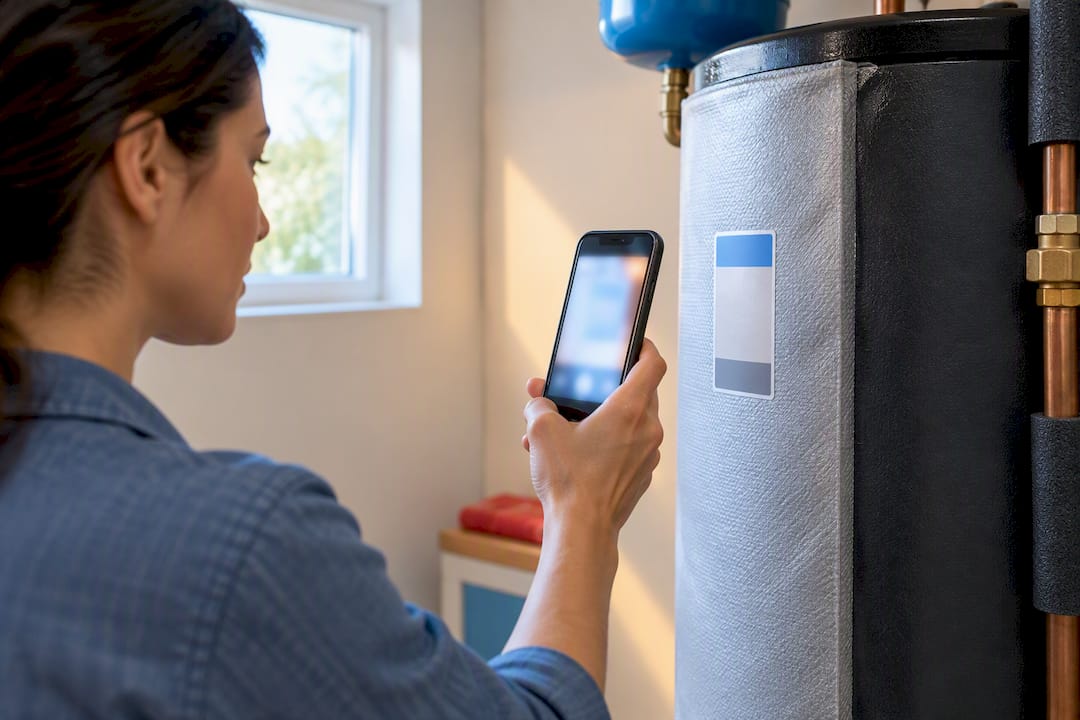
Pro Tip: Photograph your OG-300 certification sticker on the tank before it’s buried behind insulation or a utility closet door. That single photo has saved more than one homeowner an audit headache.
What State and Local Incentives Still Cut Your Cost?
Even with the federal credit gone for new installs, Florida still knocks a real chunk off the upfront price. Under Florida Statute 212.08(7)(hh), solar energy systems and their components are exempt from state sales and use tax, according to the Florida Department of Revenue’s technical bulletin.
That exemption covers more than the collector panel:
Collectors, storage tanks, and pumps used to gather and convert solar energy
Controls and accessories that are part of an integrated solar water heating system
Related hardware sold as part of the system installation
Since Florida’s exemption is applied at the point of sale, most installers handle the paperwork automatically. It never shows up as a separate line item you need to track down later, according to Solar United Neighbors.
Beyond the state exemption, check the DSIRE database, the country’s most complete listing of state and utility renewable energy programs. Utility-specific rebates change often and vary by provider, so DSIRE is the fastest way to see what’s currently active in your area. Ask your installer directly whether they routinely file for any utility rebates on a customer’s behalf. Many do, and it saves you a step.
What Did OBBB Actually Change, and What Should You Expect Next?
The One, Big, Beautiful Bill did more than end the solar water heater credit early. It accelerated termination dates across a wide range of energy provisions, according to the Congress, including:
The Residential Clean Energy Credit (Section 25D), covering solar water heating and solar electric systems
The Energy Efficient Home Improvement Credit, which covered insulation, windows, and efficient HVAC upgrades
Several clean vehicle and commercial energy production credits
For solar water heating specifically, the practical effect is simple: any project not placed in service by December 31, 2025 loses the 30% federal credit entirely, with no phasedown or partial-year allowance built into the law.
If your project timing is close to that line, or if you’re weighing whether to rush an install before year end versus wait, talk to a tax professional before you commit. Borderline cases involving multi-phase installations or delayed permits are exactly where a CPA earns their fee.
What Are Your Options if You Miss the Federal Credit?
Missing the December 2025 cutoff does not mean you are stuck paying full price. Several options still reduce the real cost of a solar water heater.
Installer financing plans often spread the cost over several years, sometimes with promotional rates that offset the lost tax credit.
Manufacturer and installer warranties protect your investment even without a federal incentive backing the purchase.
Written performance guarantees on solar pool and hot water systems give you a fallback if the system underperforms.
State and utility rebates, found through DSIRE, can still meaningfully lower your net cost.
Before signing anything, ask your installer these questions directly: Do they have a documented OG-300 certification history for systems they’ve installed. Will they provide a written performance guarantee. And can they detail the labor scope in writing, separate from the equipment cost.
Pro Tip: Get the labor scope broken out as its own line item on your quote, even without a tax credit riding on it. It makes comparing installer bids far easier, and it protects you if a warranty dispute ever comes up.
A Local Perspective on Florida Solar Water Heating
Homeowners across Florida still ask us daily whether the federal credit is gone for good. It is, for new installs after 2025, but Florida’s sales tax exemption and smart installer financing still make solar hot water one of the fastest paybacks in home energy upgrades. Some local solar providers offer free site estimates and assistance with documentation, installer statements, and permit records, and can also help coordinate with professional services for water heater disposal when replacing your old system, aiding in reviewing eligibility on past installs.
— Ronnie
Get a Free Solar Hot Water Estimate From Florida Solar East
Local solar companies may provide free site estimates, financing options, and support for understanding necessary documentation, whether planning new installations or verifying eligibility on prior ones.

If your project is close to that deadline, ask us for a written installer statement showing your placed-in-service date. It is the single most useful document you can have if the IRS ever asks. Explore our solar hot water heating systems to see what a properly certified, professionally installed system looks like, or start with a Myfloridasolar to see what your home qualifies for today.
Where to Verify These Rules Yourself
IRS OBBB FAQ: the official cutoff rules for Section 25D
IRS Residential Clean Energy Credit page and Form 5695 instructions: filing details and qualified costs
SRCC OG-300 program: certification standard for solar water heaters
DSIRE: searchable database of state and utility incentives
Florida Department of Revenue TIP: state sales tax exemption details
Sources
FAQ
Can I still get a tax credit for a solar water heater in 2026?
No. If your system is placed in service after December 31, 2025, it no longer qualifies for the federal Residential Clean Energy Credit under OBBB’s terminated rules. Systems placed in service on or before that date may still qualify.
What percentage was the solar water heater tax credit?
The credit equaled 30% of qualified costs for systems placed in service between 2022 and 2025, according to the IRS Residential Clean Energy Credit guidance. That rate applied to equipment, labor, piping, and wiring combined.
Does Florida still offer any solar water heater savings?
Yes. Florida exempts solar energy systems, including solar water heating equipment, from state sales and use tax under Section 212.08(7)(hh). Florida Solar East can walk you through how that exemption applies to a solar hot water installation.
What is OG-300 certification and why does it matter?
OG-300 is the performance certification issued through the Solar Rating Certification Corporation that confirmed a solar water heater met federal efficiency standards. Homeowners claiming the credit for installs through 2025 needed this certification on file.
What if my solar water heater installation was delayed past the deadline?
If your system was not placed in service by December 31, 2025, it does not qualify for the federal credit regardless of when you signed the contract. Ask your installer about financing plans and check DSIRE for state or utility rebates that can offset the loss.
Recommended

Comments