

22°F Attic Drop for Homeowners: When Solar Attic Fans Work
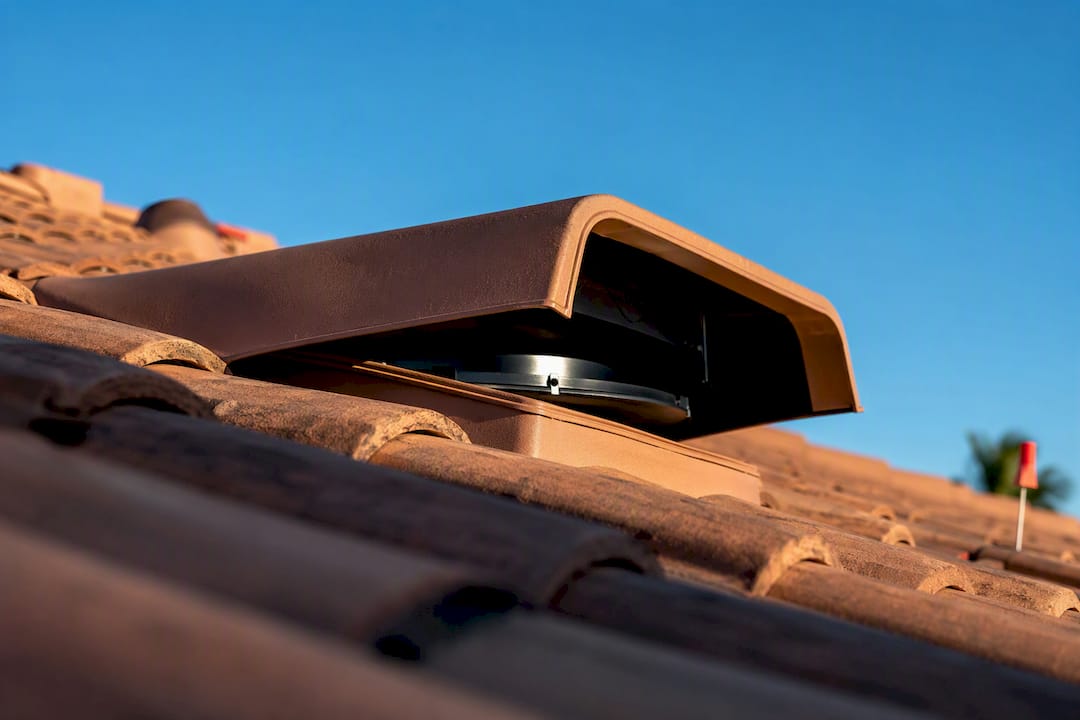
Yes, solar attic fans work, but only under the right conditions. Field testing from the Florida Solar Energy Center found a peak attic temperature drop of about 22°F and roughly 6% lower air conditioning demand in a monitored home. The catch: that benefit disappears fast if your attic lacks enough intake air or has leaky ductwork. Before you buy one, check your soffit vents and seal obvious attic leaks first.
TL;DR:
Solar attic fans are most effective when attic intake vents are unobstructed and the attic has ductwork or significant heat buildup.
Proper air sealing and ensuring balanced intake and exhaust are critical to prevent conditioned air from being pulled into the attic through leaks.
Fans only operate during sunny days, and the modest savings make them less suitable for well-insulated or humid climate attics without additional moisture controls.
A professional attic inspection and air-pressure testing are recommended before installation to confirm the home’s specific needs and maximize fan performance.
Table of Contents
How Solar Attic Fans Work
A solar attic fan runs on a small photovoltaic panel wired to a DC motor, so it spins whenever the sun hits the panel and shuts off when it doesn’t. No batteries, no wiring into your home’s electrical panel, no grid power at all. That’s the whole appeal: free operation, timed almost perfectly to the hours when your attic is heating up fastest.
But a fan only moves air out. It needs somewhere for replacement air to come in, which is why intake area at the soffits and eaves matters as much as the fan itself. Without it, The fan starves for air and starts pulling it from wherever it is easiest, including your living space through ceiling gaps.
You’ll find three basic types on the market:
Solar-only units that run purely off their attached panel and stop when clouds roll in or the sun sets.
Hybrid fans with a small battery buffer that keeps limited airflow going after dark.
Grid-wired attic fans that run continuously off household power and typically use a thermostat to cycle on and off.
Solar-only models are the most common choice for homeowners chasing zero operating cost. Just know that “zero operating cost” and “runs whenever you need it” are different promises.
What Field Testing Actually Measured
The most cited real-world data on solar attic fans comes from the Florida Solar Energy Center’s field study, which monitored a home with a photovoltaic attic ventilator installed.
The study also noted the installed cost of the unit as context for judging how long that savings would take to pay back.
Building-science guidance backs up both the promise and the limits. PNNL’s Building America Solution Center points out that solar units solve the old problem with electric attic fans: older powered ventilators sometimes drew more grid electricity than the AC savings they produced. A solar panel removes that parasitic cost entirely.
What it doesn’t remove:
The fan still needs balanced intake air to function correctly.
Well-insulated attics with no ductwork see a smaller benefit, since there’s less heat to remove that actually affects your living space.
In humid climates, daytime ventilation can pull moist outside air into the attic, which is worth watching if your region runs hot and wet for months at a time.
Pros, Cons, and the Risk Nobody Mentions at the Store
Here’s the honest trade-off list before you commit to a solar attic fan.
What you gain:
Zero added electricity cost since the panel powers the motor directly.
Ventilation timed to peak heat hours, when your attic needs it most.
A quieter, simpler system than a hardwired electric fan with no wiring into your panel.
What you give up or risk:
No airflow at night or during heavy cloud cover unless you pay more for a hybrid unit.
A roof penetration that needs proper flashing to avoid future leaks.
Savings that are real but modest, not the dramatic utility bill cut some marketing implies.
The risk that catches homeowners off guard is negative pressure. A fan pulling air out of the attic without enough intake will pull it from somewhere else, and that somewhere else is often your air-conditioned living space, right through can lights, attic hatches, and gaps around plumbing stacks. Building-science practitioners have flagged this as the main reason attic fans sometimes disappoint: you end up paying to cool air that then gets sucked into the attic and exhausted outside.
Pro Tip: Before installing a fan, do a simple smoke-pencil or incense-stick test near ceiling penetrations on a windy day. If smoke gets pulled upward toward the attic hatch or can lights, you likely have air-sealing gaps that need fixing first.
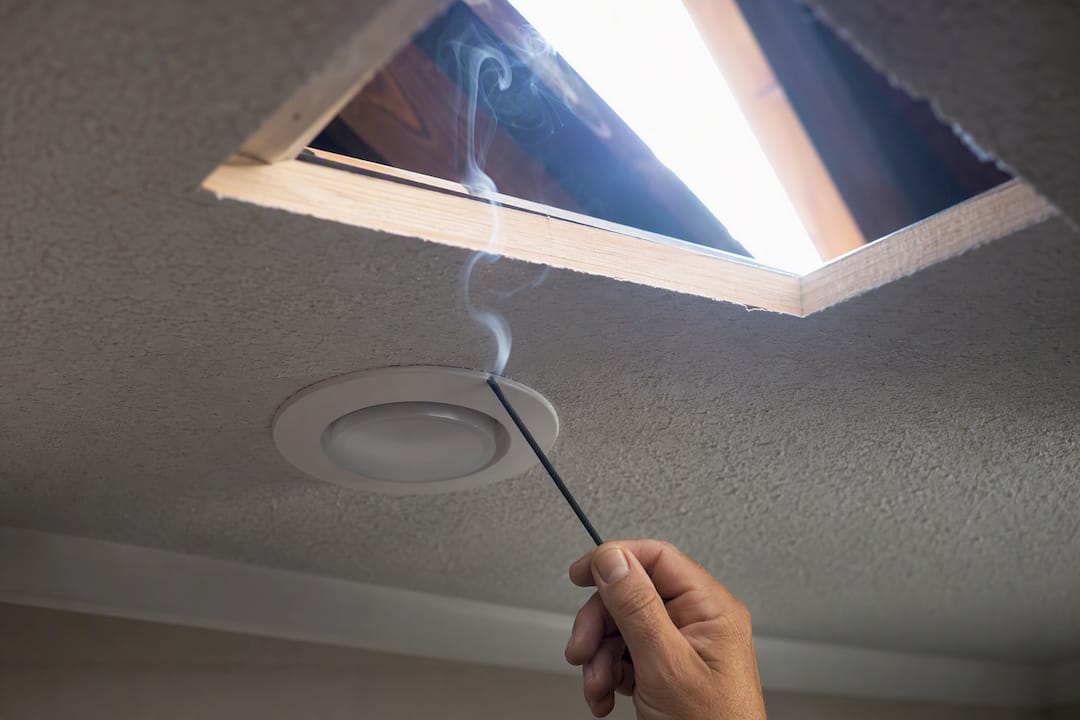
Air sealing the attic floor, keeping soffit vents clear of insulation, choosing a lower-CFM unit, and adding a humidistat control in humid climates all reduce these risks.
Is Your Attic a Good Candidate?
Some attics are strong candidates for a solar fan. Others will barely notice one is installed. The difference comes down to a handful of physical traits you can check yourself.
Signs a solar attic fan will likely help:
Your home has ductwork or an air handler located in the attic, where heat directly affects conditioned air.
Attic temperatures regularly climb well above outdoor temperatures on sunny afternoons.
Soffit vents are clear, unobstructed, and provide real intake area.
Your home is older with minimal passive ventilation, like undersized ridge or gable vents.
Signs it probably won’t move the needle much:
Your attic already has thick, even insulation and no ductwork running through it.
Soffit intake is blocked by insulation, paint, or renovation work.
You live somewhere with high year-round humidity and no plan to control moisture with the fan running daily.
Run this quick check before calling anyone: look up at your soffits from outside and confirm you can see daylight or airflow through the vent holes. Climb into the attic (safely, on a cooler day) and feel for airflow near the eaves. If intake feels blocked or nonexistent, that’s your first project, not the fan.
Getting the Installation Right
Skipping prep work is the single biggest reason solar attic fans underperform. Do these in order:
Air-seal the attic floor around light fixtures, plumbing stacks, and the attic hatch to stop conditioned air from being pulled upward.
Confirm soffit baffles are in place so insulation doesn’t block airflow at the eaves, and compare your intake’s net free vent area against the fan’s rated exhaust capacity, following balanced intake and exhaust guidance from IIBEC.
Size the fan appropriately. Most residential PV units run in the low-to-moderate CFM range; oversizing without matching intake just worsens the pressure problem.
For control, a straightforward thermostat works for most dry climates. In humid regions, a humidistat, or a hybrid unit with battery backup for after-hours operation, gives you more precise control over when the attic actually vents.
Pro Tip: If your attic needs more airflow than one fan provides, adding a second unit on the opposite roof slope is usually smarter than oversizing a single fan, since it spreads intake demand across more soffit area.
What Solar Attic Fans Really Cost You (and Save You)
Expect the fan unit itself to run around $300, with installation labor adding roughly $100 to $150 on top, based on figures from the FSEC field study. Maintenance is minimal: an occasional check that the panel is clean and the motor spins freely, with most units rated to last 10 to 20 years.
Factor | Typical figure |
Unit cost | ~$300 |
Installation labor | ~$100–150 |
Peak attic temp reduction | about twenty degrees Fahrenheit |
AC demand reduction | about six percent |
Estimated annual savings | roughly four hundred sixty kilowatt-hours |
Expected lifespan | 10–20 years |
Run the math on that 460 kWh figure at your local electric rate, and you’ll usually land on a payback measured in many years, sometimes decades, rather than months. That doesn’t make it a bad purchase. It makes it one you should judge on attic comfort and heat reduction, not on a fast return alone.
On tax credits: rules change, and eligibility for a given attic fan model depends on specifics the IRS sets each year. Check current guidance directly through ENERGY STAR’s federal tax credit page before assuming a purchase qualifies.
How Myfloridasolar Evaluates Attics Before Recommending a Fan
We don’t start every attic conversation with a fan pitch. Our process typically covers:
A full attic inspection checking insulation depth, ductwork location, and existing ventilation.
An intake evaluation at the soffits to confirm there’s enough free area to support added exhaust.
A recommendation on whether air sealing or insulation upgrades should come before, or instead of, a fan.
*Author: Ronnie,.
Your Next Move on Attic Heat
Solar attic fans work when your attic has ductwork, real heat buildup, and enough intake air to support them. Start with the self-checklist above, then schedule an attic diagnostic before buying anything. Ask any pro you hire for an attic pressure test, duct leakage numbers, and the fan’s rated CFM against your actual intake area.
— Ronnie
Get an Attic Diagnostic Before You Buy a Fan
Guessing at attic ventilation wastes money either way, on a fan that underperforms or on skipped prep work that would have made it effective. A professional attic evaluation should include inspection of insulation, ductwork, and intake vents, followed by recommendations for air sealing, insulation upgrades, or solar attic fan installation based on the home’s specific needs rather than a generic product pitch.

If your attic runs hot every summer and you’re ready to find out what’s actually causing it, request a free solar electric and attic assessment and get a straight answer on whether a fan, better sealing, or both make sense for your home. Financing options and the federal tax credit can be discussed on the same visit.
Sources
FAQ
Do Solar Attic Fans Make a Difference?
Yes, in the right attic.
What Are the Disadvantages of Solar Attic Fans?
The main risks are pulling conditioned air through ceiling leaks when intake is inadequate, adding a roof penetration that needs proper flashing, and producing only modest savings in already efficient attics. Humid climates also need moisture-conscious controls.
How Long Do Solar-Powered Attic Fans Last?
Most quality units last 10 to 20 years with minimal maintenance beyond keeping the panel clean and checking that the motor still spins freely.
Do Solar Attic Fans Qualify for Federal Tax Credits?
Eligibility depends on current IRS rules and the specific equipment installed, so check the ENERGY STAR federal tax credit guidance directly before assuming a given fan qualifies.
Recommended

Comments