

$2,500–$8,500: Solar Pool Heating Cost for Homeowners, by Pool Size
Most homeowners pay between $2,500 and $8,500 for a fully installed solar pool heating system, with an average of about $4,500 to $5,000. Where you land in that range mostly comes down to your pool size, the collector type you choose, and how much plumbing and mounting work your roof requires. The payoff: monthly operating costs of roughly $10 to $25, a fraction of what a gas heater burns through.
TL;DR:
Larger pools or colder climates require more collector area, increasing installation costs up to around $8,500 for pools over 25,000 gallons.
Installation costs depend heavily on roof type, pipe length, permits, and mounting complexity but are generally between $2,500 and $8,500.
Operating costs are minimal, typically $10 to $25 per month, thanks to the system’s reliance on your existing pool pump rather than gas or electric heaters.
Homeowners should aim for collector area covering 50% to 100% of pool surface, meaning about 9 to 10 panels for a 500 sq ft pool, with costs varying based on collector type.
DIY kits can undercut professional prices by thousands but lack warranties and may void warranties if improperly installed.
Table of Contents
How Much Does Solar Pool Heating Cost by Pool Size?
Your installed price scales almost directly with how much collector area your pool needs. A national average near $4,500 to $5,000 covers a typical residential inground pool, but the honest range runs wider once you factor in climate and collector type.
Here’s how that breaks down by pool size:
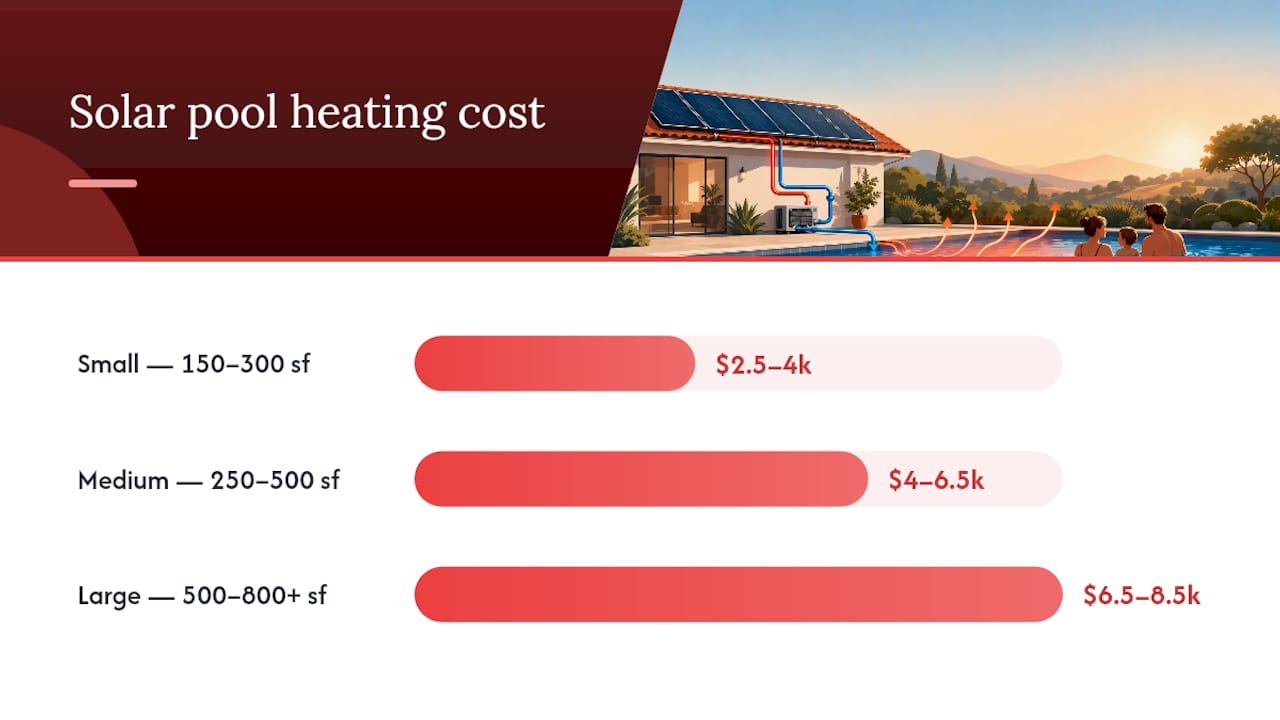
Small pool (roughly 10,000 gallons, 300 sq ft surface): 150 to 300 sq ft of collector, installed cost around $2,500 to $4,000.
Medium pool (15,000 to 20,000 gallons, 450 to 600 sq ft surface): 250 to 500 sq ft of collector, installed cost around $4,000 to $6,500.
Large pool (25,000+ gallons, 800+ sq ft surface): 500 to 800+ sq ft of collector, installed cost around $6,500 to $8,500.
Pro Tip: Get quotes based on your actual surface area in square feet, not gallons. Two pools holding the same water volume can need very different collector sizes depending on shape and depth.
Climate plays a real role, too. Homes in the Northeast and West Coast tend to see higher installed costs than the Southeast, partly because labor runs higher and partly because colder regions lean toward pricier glazed collectors instead of unglazed panels.
What Drives the Price of a Solar Pool Heater?
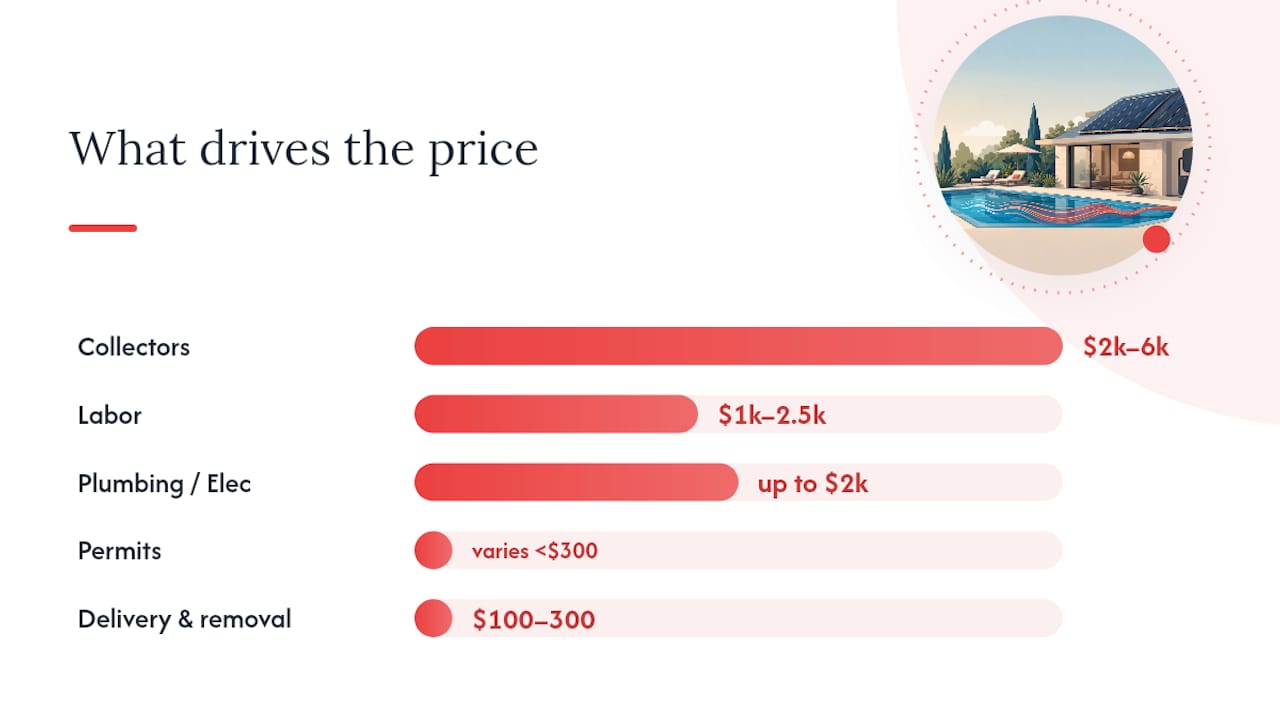
Every quote breaks into the same basic buckets, even when the total looks wildly different from one installer to the next. Collectors typically run $2,000 to $6,000, labor adds another $1,000 to $2,500, and plumbing or electrical work can tack on up to $2,000 more depending on how far the pump sits from your roof or ground mount.
A few things move these numbers more than homeowners expect:
Roof type and mounting: tile and steep-pitch roofs need extra brackets and flashing work, which adds labor hours.
Pipe run length: the farther your collectors sit from the pool equipment pad, the more PVC, fittings, and labor you’re paying for.
Permits: costs vary by city and can range from under $100 to several hundred dollars.
Delivery and old-heater removal: small line items, usually $100 to $300 combined, but they show up on nearly every quote.
Negotiate on labor and mounting hardware first. Collector prices are fairly fixed by manufacturer.
How Many Solar Panels Do You Need for a Pool?
Installers size systems using a simple rule: collector area should equal 50% to 100% of your pool’s surface area. Colder climates and homeowners who want extended swim seasons should aim toward the higher end; warmer regions can often get away with 50 to 65%.
Here’s how that math plays out for a 500 square foot pool:
Calculate target collector area: 500 sq ft x 0.75 (mid range) = 375 sq ft of collector needed.
Convert to panel count: standard panels measure 4 feet by 10 feet, or 40 sq ft each. That’s roughly 9 to 10 panels.
Estimate panel cost: at $15 to $35 per square foot installed, 375 sq ft lands between $5,600 and $13,100 before labor savings from bulk mounting.
Unglazed collectors (typically black polypropylene) cost less and suit warm climates fine. Glazed collectors, with a glass cover that traps heat, cost more upfront but perform better where nights run cool.
What Happens During a Solar Pool Heater Installation?
A straightforward install on a single-story, low-pitch roof takes one to two technicians roughly 6 to 12 hours. Solar technicians handle the collector mounting and plumbing tie-in; a licensed electrician usually connects any controller wiring, and a roofer occasionally gets called in for tile or slate roofs that need specialized flashing.
Labor typically bills at flat project rates baked into that $1,000 to $2,500 range rather than hourly, though some installers charge $75 to $125 per hour for add-on work.
Several factors can push labor time and cost higher:
Steep or multi-story roof access
Long plumbing runs between collectors and the pool pad
Extra mount reinforcement on older roofs
Second-floor or detached-structure installations
Pro Tip: Ask installers upfront whether your roof pitch or material adds a surcharge. Tile roofs almost always do, and it’s better to know before the quote lands in your inbox.
What Does It Cost to Run and Maintain a Solar Pool Heater?
Solar pool heaters win on operating cost. Because they piggyback on your existing pool pump instead of running a separate burner or compressor, monthly electricity costs typically land at $10 to $25. Compare that with gas heaters, which can run hundreds of dollars a month during peak season, and the gap becomes obvious fast.
Maintenance stays light too:
Annual inspection and panel cleaning: often DIY, or $75 to $150 if you hire it out
Occasional valve or seal replacement: $50 to $200 as needed
Optional variable-speed pump upgrade: $400 to $1,200, which cuts pump runtime and extends collector life
Payback windows typically fall between two and seven years, depending on your prior heating fuel, local electricity rates, and how many months a year you swim. Florida homeowners running a heat pump year round often see faster payback comparisons than colder climates where the swim season is shorter.
DIY Kits or Professional Installation: Which Costs Less?
DIY solar pool heater kits run considerably cheaper upfront, with national average installs closer to $5,085 for professional jobs versus kit-only pricing that can undercut that by thousands if you supply the labor. The tradeoff is real: DIY kits skip installer warranties, and improper mounting or plumbing tie-ins can void your roof warranty or cause leaks. DIY makes sense if you’re comfortable with basic plumbing and have a simple, ground-level, low-pitch installation.
Professional installs cost more but include workmanship warranties, code-compliant plumbing integration, and proper structural mounting, which matters most on older or steeply pitched roofs.
Before signing any quote, work through this checklist:
Does the quote specify exact collector area and type (glazed vs. unglazed)?
What’s included for mounting hardware and roof penetration sealing?
Are permits and disposal of an old heater itemized separately?
What warranty terms cover the collectors versus the labor?
What’s the estimated project timeline from signing to completion?
Why Work With a Local Installer Like Florida Solar East?
Florida Solar East installs solar pool heating systems built around the state’s long swim season and intense sun exposure, alongside its broader lineup of photovoltaic and solar hot water systems. Homeowners weighing installed cost against long-term savings can factor in financing options and the 30% federal tax credit currently available for qualifying solar thermal projects, which meaningfully lowers net installation cost. For homeowners comparing pool heating equipment before committing, the FAQ resource covers common questions on collector types and expected performance in Florida’s climate.
Who Should Actually Choose Solar Pool Heating?
Solar pool heating pays off fastest for homeowners who swim most of the year and have decent roof exposure. If your roof faces mostly shade or you swim only a few weeks a summer, a heat pump or gas heater may fit your budget better.
— Ronnie
Get a Free Solar Pool Heating Estimate
Some companies provide real cost pictures instead of rough online guesses, offering free on-site estimates that measure actual pool surface, roof condition, and pipe run distance to produce firm quotes rather than ranges.

During the visit, a technician walks your property, checks roof pitch and pump location, and answers questions about collector type before you sign anything. If you’re also weighing a full photovoltaic system for your home, ask about bundling estimates in the same visit. Homeowners exploring alternative pool designs may also find value comparing approaches with resources like this natural swimming pool overview before deciding on solar heating.
Ready to see your number? Request your free solar pool heating estimate today and get a quote built around your actual pool, not a national average.
Sources
FAQ
Is Solar Pool Heating Worth the Cost?
For homeowners who swim most of the year, yes. Low monthly operating costs of $10 to $25 and payback windows of two to seven years make it one of the more cost-effective pool heating upgrades available.
How Much Does a Solar Pool Heating System Cost?
Installed systems typically run $2,500 to $8,500, with a national average around $4,500 to $5,000 depending on pool size and collector type.
What’s the Cheapest Way to Heat a Pool?
A solar pool cover paired with solar collectors offers the lowest ongoing cost of any heating method, since it relies on your existing pump instead of gas or electric resistance heat. DIY solar kits also lower upfront cost compared with professional installation, though they trade off warranty coverage.
How Many Solar Panels Do You Need for a Pool Heater?
Collector area should cover 50% to 100% of your pool’s surface area. For a 500 square foot pool, that means roughly 9 to 10 standard 4 by 10 foot panels.
Recommended

Comments