

Florida Homeowners: When a $500–$1,200 Solar Tube Beats a Skylight
- Ronnie Brewer
- 2 days ago
- 7 min read
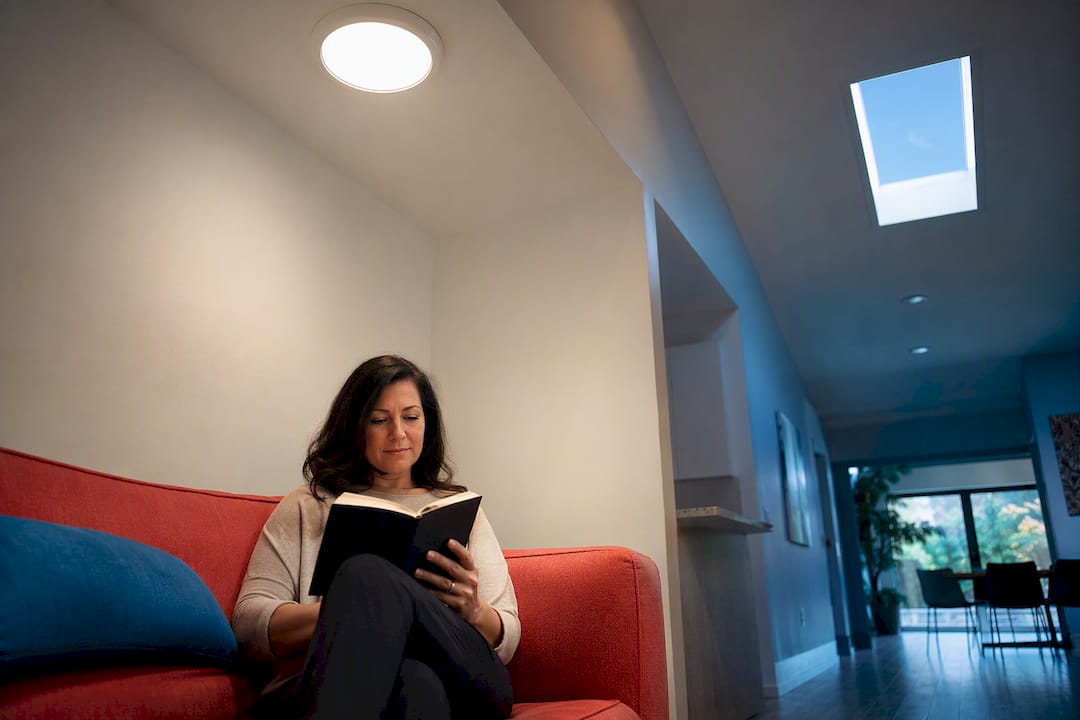
If you want a sky view, ventilation, or a bold architectural feature, choose a skylight. If you want affordable, low-mess daylight for a hallway, closet, or windowless bathroom, choose a solar tube. The trade-off comes down to control and impact versus cost and speed; skylights give you more, but they cost more and carry a higher leak risk if installed poorly.
TL;DR:
Solar tubes cost between $500 and $1,200 to install and take only a few hours, making them a budget-friendly option for small, interior spaces.
Skylights range from $1,500 to over $4,500, often requiring multiple days for installation and providing direct sky views and optional ventilation.
Solar tubes emit diffused, shadow-free light comparable to several 100-watt bulbs, but cannot provide views or fresh air, unlike skylights.
Proper flashing quality and roof condition are critical to prevent leaks, regardless of whether choosing a skylight or a solar tube.
Attic access, roof pitch, and shading heavily influence the most suitable daylighting option and should be assessed before purchasing.
Table of Contents
Solar Tube vs Skylight: The Quick Compare
Before you commit to either option, look at how they stack up on the factors that actually affect your daily life and your wallet.
Light and view: Skylights offer direct sunlight and sky views; solar tubes deliver diffused light only, with no view.
Ventilation: Venting skylights open for fresh air; solar tubes never vent.
Installed cost: Solar tubes typically run in a lower price range; skylights are more expensive depending on size and glazing.
Installation time: A solar tube often installs in a few hours; a skylight can take a full day to several days.
Leak probability: Skylights have more flashing seams and a higher leak risk over time; tubes have a single small roof penetration.
Best room fit: Tubes suit hallways and bathrooms; skylights suit living rooms and kitchens.
How Skylights and Solar Tubes Actually Deliver Daylight
A skylight is essentially a window built into your roof. It sits above a light well, the boxed-in shaft that channels daylight down through your attic into the room below. Fixed skylights stay sealed; venting models open like a hatch, letting you push out heat and moisture. That extra hardware is also why skylights need more careful flashing work where the glazing meets your roofing material.
A solar tube works differently. A clear dome on the roof captures sunlight, which travels down a reflective tube (rigid metal or flexible, accordion-style) before spilling into the room through a diffuser panel. Most residential systems use 10 inch or 14 inch tubes. Longer runs and sharp bends cut into how much light reaches the ceiling, since every foot of tube and every elbow scatters a portion of the beam. Flexible tubing helps you route around rafters and ductwork, but rigid tubing carries light more efficiently when your attic layout allows a straight shot.
What Kind of Light Should You Expect in Each Room?
Skylights hand you a piece of the sky. You get direct, viewable daylight that changes with the weather and time of day, plus the option to look up and see clouds or stars. Solar tubes hand you something more like a permanently “on” ceiling light: soft, even, shadow-free illumination with no view attached.
A single 10-inch solar tube on a sunny day puts out light comparable to several 100-watt bulbs, according to Today’s Homeowner. That output shifts with your roof’s orientation, the tube’s length, nearby tree cover, and cloud conditions, so a south-facing roof in open sun will always outperform a shaded north slope. Neither system replaces task lighting for close work like reading or shaving, but both add meaningful ambient light that supports circadian comfort in windowless spaces. Just don’t expect a tube to crack open for fresh air.
What Do Solar Tubes and Skylights Cost to Install?
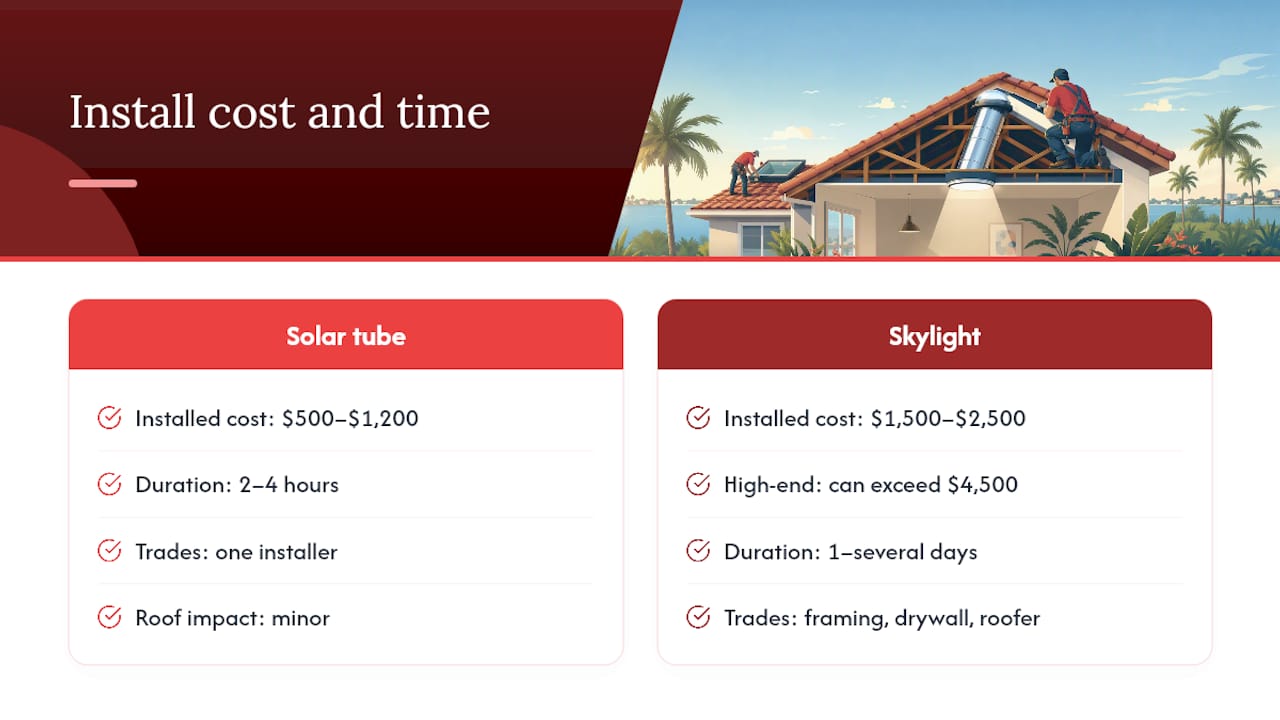
Budget matters as much as looks here. A solar tube typically installs for $500 to $1,200, and most jobs wrap up in half a day since the work is limited to cutting a small roof hole, running the tube, and sealing the flashing collar.
A skylight costs more because it demands more trades. Fixed models start around $1,500 to $2,500 installed; venting or larger custom units can climb past $4,500 once you factor in framing, drywall finishing, interior trim, and roofing flashing. Some trade sources note sun tunnels running 50% to 70% less than traditional skylights, which tracks with what installers see on real job sites.
Timeline follows the same pattern. A tube job might take two to four hours with one installer. A skylight install often runs a full day to several days, especially if your roof needs new framing or you’re bringing in a drywall finisher and a roofer separately. Steep rooflines or tile roofing can add scaffolding costs and extend the schedule on either project.
Pros, Cons, and Maintenance You’ll Actually Deal With
Every option has upkeep. Here’s what to expect once the installer packs up.
Skylight advantages: real sky views, operable ventilation, strong architectural impact, better for large or high-traffic rooms.
Skylight drawbacks: higher upfront cost, more flashing seams that can fail over time, periodic reseal or reglaze needs, harder to clean on steep roofs.
Solar tube advantages: lower cost, faster install, minimal roof penetration means lower leak exposure, works well in tight attic spaces.
Solar tube drawbacks: no venting, no view, less control over light intensity, limited to smaller rooms given tube diameter caps.
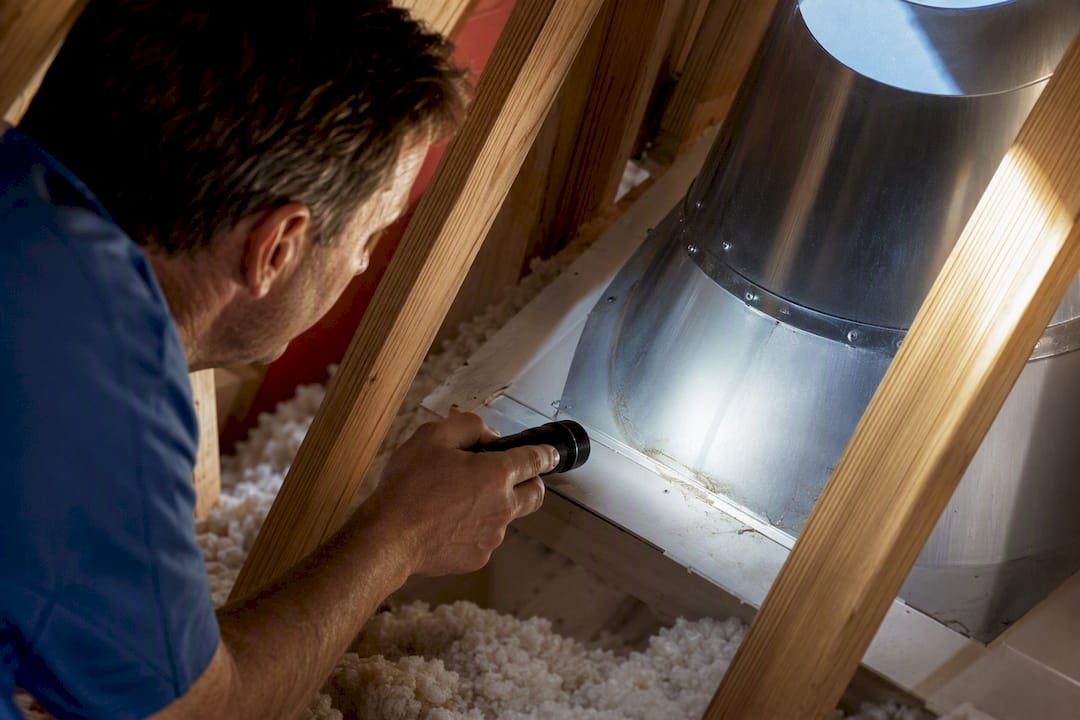
Pro Tip: Walk your attic once a year with a flashlight and check the flashing collar or light well seams for water staining. Catching a small leak early is far cheaper than replacing drywall after a rainy season.
Which Option Fits Your Room and Roof?
Match the system to the space, not the trend. Here’s how installers typically sort requests:
Choose a solar tube for hallways, closets, laundry rooms, or a windowless bathroom where budget and speed matter more than a view.
Choose a solar tube when your attic access is limited or your roof framing can’t easily support a large opening.
Choose a skylight for living rooms, kitchens, or bedrooms where you want a sky view or the option to vent moisture and heat.
Choose a skylight if you’re already mid-renovation and adding framing, drywall, or roofing work makes the extra labor cost less painful.
Consider both in the same home: tubes for interior rooms, a skylight over your main living space.
Before an installer visits, measure your ceiling height and roof run, confirm attic access points, note your roofing material, and flag any nearby trees or shading that could cut into tube performance.
How Do Skylights and Solar Tubes Affect Your Energy Bill?
Skylights are glazed openings, so they gain and lose heat more than a solid roof section. Low-e coatings, double or triple glazing, and interior shades cut that impact but don’t erase it entirely. In Florida’s climate, an unshaded south-facing skylight can add real cooling load in summer months.
Solar tubes generally carry a lower thermal impact because the roof penetration is small, which limits how much heat transfers through the shaft. Insulating the tube itself in unconditioned attic space still helps, especially in older homes. Diffuser films and blinds on either system reduce glare and UV without blocking most of the usable light, and pairing tube installs with a solar attic fan helps manage attic heat buildup during Florida summers.
What Installers See in the Field
After, the pattern holds across most Florida homes: roof pitch and attic obstructions decide feasibility before budget even enters the conversation. Steep tile roofs need extra flashing attention on skylights, while low-clearance attics often push homeowners toward a tube instead.
and both point to the same conclusion: flashing quality, not the product itself, determines whether either system stays leak-free for years. Myfloridasolar offers free site estimates for homeowners who want a professional read on their roof before committing to either option.
Bottom Line: Pick by Room, Then by Budget
If your goal is a view, ventilation, or a design statement in a main living space, a skylight earns its higher price tag. If you’re lighting a hallway, closet, or windowless bath on a tighter budget, a solar tube gets you there faster and cheaper. Either way, start with three steps: measure the room and roof section, check your attic access and roofing material, and request a free site evaluation before you buy anything.
Why the “Which Is Better” Debate Misses the Point
Most articles on this topic try to crown a winner, and that framing does homeowners a disservice. Skylights and solar tubes solve different problems, and treating them as competitors leads people to overspend on a tube for a room that needed a real window, or overspend on a skylight for a closet that just needed a light source.
The bigger mistake I see in the conventional advice is downplaying installation quality. Every comparison guide talks about tube diameter and glazing coatings, but the real variable that determines whether you’re happy in five years is flashing craftsmanship. A cheap tube installed poorly will leak faster than an expensive skylight installed correctly. Cost comparisons matter, but they matter less than who’s doing the work.
If you take one thing from this guide, prioritize attic access and roof condition before you fall in love with either product. A homeowner with a straightforward attic run and a south-facing roof section has more options than the cost charts suggest. Start there, then let budget narrow the field.
— Ronnie
Ready to Add Daylight? Here’s Where Myfloridasolar Comes In
Whether you land on a solar tube for your hallway or a skylight for your living room, the install quality determines whether you get years of trouble-free daylight or a ceiling stain by next rainy season. Myfloridasolar brings that same installation discipline to every solar project we handle across Florida, from rooftop daylighting details to full photovoltaic systems that cut your utility bills.

We also install solar pool heating systems and solar hot water systems for homeowners looking to stretch their energy savings beyond daylighting alone. If you’re weighing a bigger energy upgrade alongside your natural-light project, our team walks you through financing options, including the 30% federal tax credit, so you know your real costs upfront. Request a free site estimate today and get a straight answer on what your roof and attic can support.
Sources
Recommended

Comments